
External recognition
Profile story: American Printing House — Alex Liddell and assistive technology.
Read the profileAbout
AGL Access Works is the practical assistive technology and access consultancy of Alex Liddell.
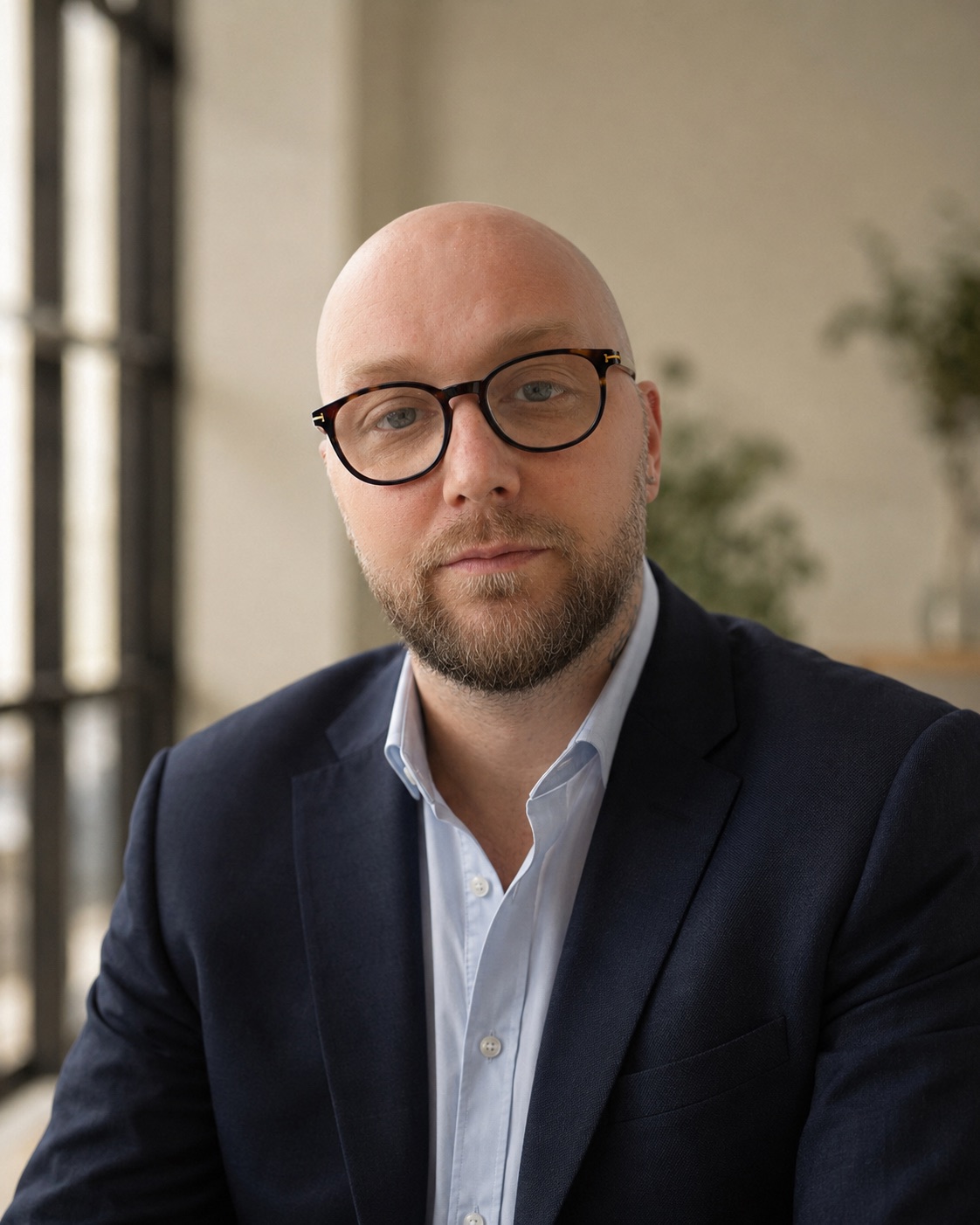
Founder
AGL Access Works is led by Alex Liddell, a specialist in visual impairment, assistive technology, switch access and practical access implementation. Alex's work focuses on the gap between "this technology should be accessible" and "this actually works for the person in real life."
I specialise in visual impairment and assistive technology, but I also work where access is complicated — when vision, mobility, speech, fatigue, physical input, workplace systems, documents and support routines all overlap.
That gap can be significant. Access can be affected by vision, hearing, mobility, fatigue, speech, positioning, confidence, environment, support staff, workplace systems or a combination of needs. AGL Access Works looks at these barriers practically and builds a route through them.
Alex has experience with screen readers, magnification, voice access, switch access, adapted hardware, accessible documents, Microsoft 365 tools and AI-supported accessibility workflows. His focus is not just recommending equipment, but helping people and support teams understand how to use it, maintain it and hand it over properly.
AGL Access Works supports disabled people, families, employers, education settings, case managers, occupational therapists, rehabilitation professionals, care teams, IT teams and other support networks where access barriers are practical, technical or complex.
Profile story: American Printing House — Alex Liddell and assistive technology.
Read the profileThe process
Start with one task, barrier or situation.
I look at the person, task, tools, setting and support around them.
Options are tried against real devices, documents and routines.
Next steps are written so others can understand and act on them.
Training, follow-up and handover can keep the access route working.
Private visual impairment and assistive technology support
Tell me what is difficult, what has already been tried, and what you would like to be easier. You do not need to know the technical name or the right solution.